
Price and cost pressure
Cheaper virgin alternatives and lower utilisation squeeze the return per saleable tonne.
Intelligence Unit
Why weak economics can become permanent capacity loss
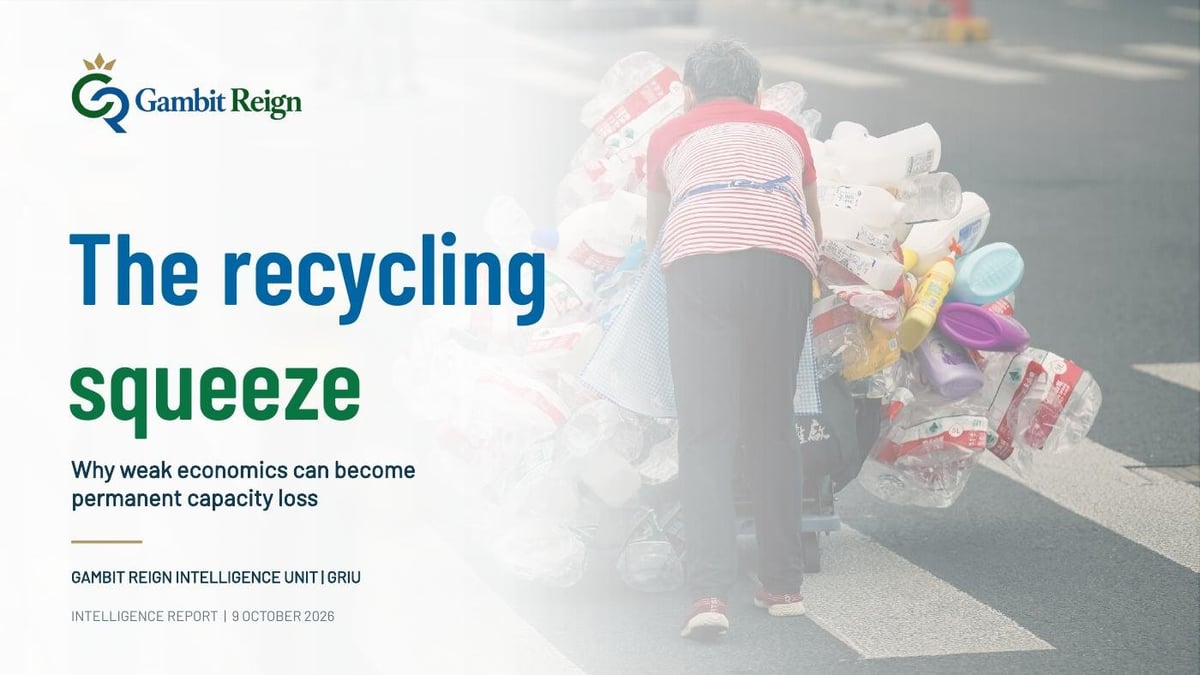
Plastics recycling is caught between virgin-linked selling prices and processing costs that are difficult to remove. When weak demand reduces throughput, a margin squeeze can become lasting capacity loss. This GRIU report examines how market economics, material quality, policy, shipping disruption and war-related pressures interact, and what operators, buyers and investors can do to strengthen resilience.
28-page PDF, free to download. We ask for your name and email so the Intelligence Unit knows who is reading.
Four pressures act on the same plants at the same time, and they compound rather than cancel out.
Cheaper virgin alternatives and lower utilisation squeeze the return per saleable tonne.
Contracted demand and verified quality offer stronger protection than scale alone.
Shipping disruption and war can raise logistics, energy and financing costs even when virgin prices rise.
Plant closures can erode collection outlets, skills and buyer relationships that are difficult to rebuild.
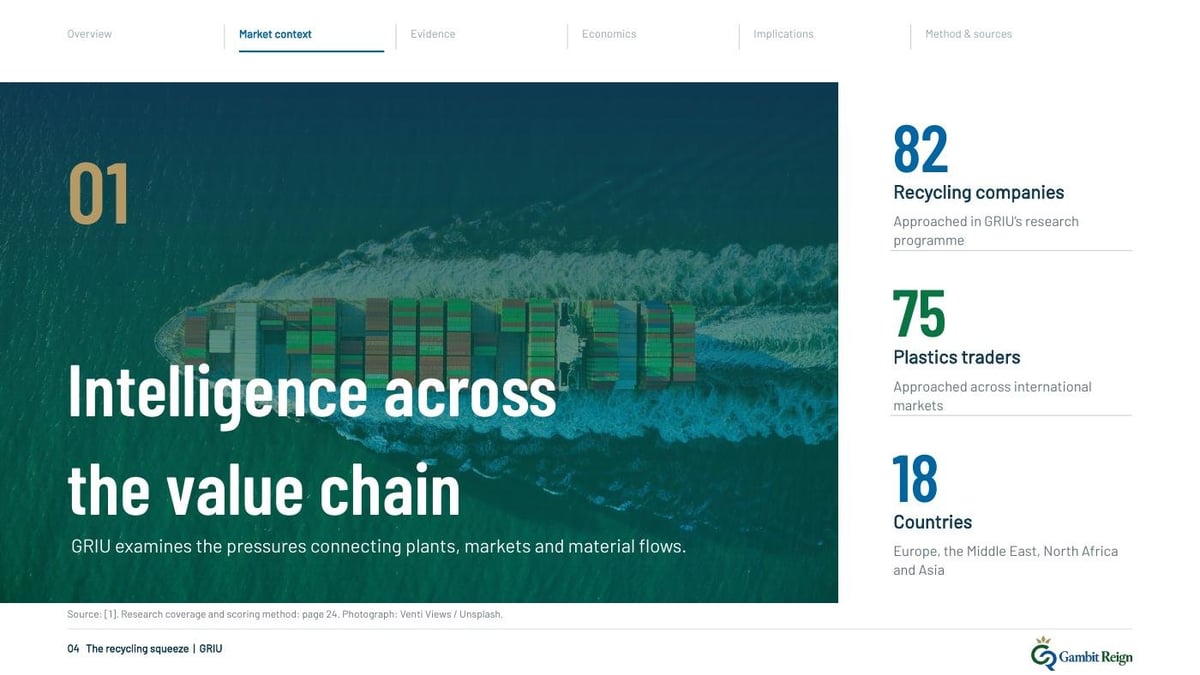
A page from the report, showing the research programme behind it. The full 28-page document is available as a free PDF.
The report draws on a research programme that approached 82 recyclers and 75 plastics traders across 18 countries, alongside market and policy sources.
28 pages of ranked factor analysis, scenarios and monitoring priorities — free to download.