
Food security is a supply portfolio decision
Food security is usually discussed as a production question. For an individual business, it is a portfolio question — and portfolios are managed on concentration, lead time and total landed cost.
- Byline
- Gambit Reign analysis
- Period covered
- 2021–2022
- Reviewed
- 6 October 2026
- Topic
- Operations & strategy
- Reading time
- 4 min read
Key takeaways
- A national food security strategy describes direction — diversified sourcing, technology-enabled local production and supply resilience. It does not establish that domestic production is the lowest-cost option for any particular product.
- The commercial question is portfolio concentration: how many independent sources a critical input has, and how correlated their failure modes are.
- Contingency inventory is a cost, not a solution. It should be sized against lead-time variability and shelf life, not held as a general buffer.
What the strategy actually provides
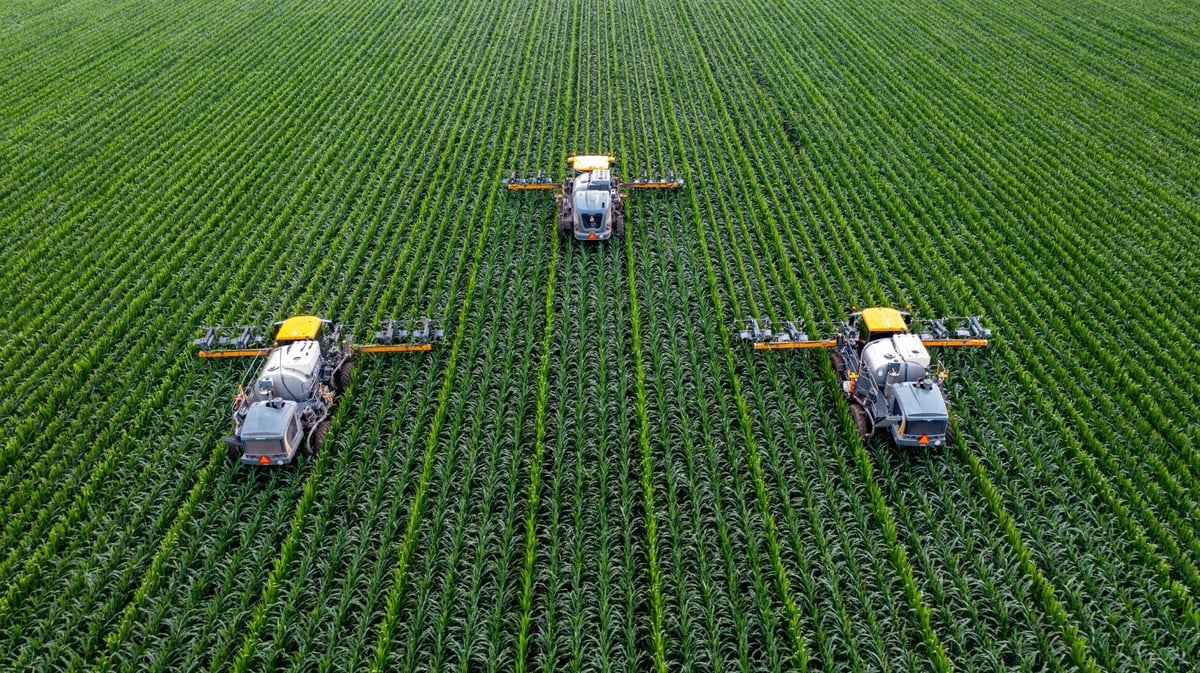
The UAE's National Food Security Strategy 2051 sets out an approach built around diversified sourcing, sustainable technology-enabled local production and supply resilience. [A] These are direction-of-travel statements about national posture. They are not, and do not claim to be, evidence that domestic production of any given product is commercially cheaper than importing it.
That distinction matters because it is easy to read a national strategy as a cost signal. Technology-enabled production can make some categories viable domestically where they were not before — protected cultivation, controlled-environment growing and similar approaches change the economics for specific products in specific circumstances. But 'can be viable in some circumstances' is not 'is the cheapest option', and a business case built on the assumption will not survive contact with a landed-cost comparison.
The strategy is most useful to a business in three ways: understanding the direction of national policy, anticipating where infrastructure and capability may improve, and recognising which categories are likely to attract investment and therefore competition.
Concentration: the risk that is not on the cost sheet
Most supply risk is concentration risk, and concentration is frequently invisible in a cost comparison. A business may have four suppliers for a critical input, all sourcing from the same origin and shipping through the same route. On paper that is diversification; in practice a single disruption affects all four simultaneously.
The diagnostic question is not how many suppliers exist but how many independent failure modes the portfolio has. Sources that share an origin, a shipping route, a port, a currency or a regulatory treatment are correlated. Correlated sources should be counted as one for resilience purposes, however many contracts exist.
This is where an honest matrix beats a score. Assigning countries numerical risk scores invites false precision and tends to encode judgements the analysis cannot support. Describing the concrete dependencies instead — which origins, routes and processing steps a product depends on — produces a picture a business can act on.
| Input | Independent sources | Shared dependency | Substitution |
|---|---|---|---|
| Primary raw material | Count genuine independent origins | Same origin / same route? | Alternate grade or origin qualified? |
| Secondary ingredient | Distinct suppliers, same country? | Same processing region? | Reformulation sensitivity assessed? |
| Packaging | More than one converter? | Same material supplier upstream? | Alternate format tooled? |
| Inbound logistics | More than one route? | Single port or corridor? | Alternate mode costed? |
| Utilities | Grid only, or on-site backup? | Single point of supply? | Backup duration and cost? |
This dependency map is our own working structure for describing exposure. It deliberately records concrete shared dependencies rather than numeric country risk scores, which cannot be supported by the available sources and invite false precision.
Lead time and shelf life set the inventory requirement
The size of contingency stock is determined by two variables that interact: how variable the lead time is, and how long the product keeps. Neither alone tells you what to hold.
A stable long lead time can be managed with modest safety stock, because the variability is low and the order can be planned. A short but highly variable lead time demands more cover, because the business cannot predict when replenishment arrives. The relevant measure is therefore lead-time variability, not lead time itself.
Shelf life caps the strategy. Where a product has a short shelf life, holding deep contingency stock is not possible — the cover expires before it can be used, and the holding cost becomes a write-off. For those products, resilience has to come from elsewhere: multiple sources, contractual priority, or reformulation to an ingredient with greater tolerance.
This is also where substitution earns its place. A qualified alternate specification, already tested and approved, converts a disruption from a production stoppage into a changeover. It is usually cheaper to qualify a substitute in advance than to find one during an event.
Utility dependence is supply dependence
For domestically produced food, security of supply depends on utilities as much as on ingredients. Controlled-environment production and processing both depend on continuous power and, frequently, on water of a specific quality.
Where a business is considering domestic production, the utility question is not whether a connection exists but what the reliability is, what redundancy is available, and what an interruption costs. For some processes the tolerance for interruption is very low, which makes standby generation or storage a capital requirement rather than an operating preference.
Water deserves separate attention. Availability, quality and treatment requirement vary substantially by location and by process, and the cost of treatment to the required standard belongs in the comparison rather than in a later surprise.
Total landed cost, compared honestly
The comparison that decides most sourcing questions is total landed cost to the point of use: purchase price, freight, duty, insurance, handling, and the cost of the inventory carried across the lead time. Domestic production replaces several of those lines while introducing others — energy, labour, utilities and capital recovery.
Comparing a domestic unit cost against a foreign ex-works price is the most common error. It overstates the domestic case by omitting the inventory and logistics the import actually carries, and understates it by assuming the domestic plant will run at the utilisation the model assumes.
The honest comparison runs both options at realistic utilisation, includes inventory cost across the actual lead time, and states what has been assumed about volume and mix. Where the answer is close, the decision usually turns on characteristics the cost comparison cannot capture: responsiveness, lead time, quality consistency and the strategic value of having a domestic source at all.
Limitations
- This article sets out a sourcing portfolio framework. It is not an assessment of any specific product, origin or business, and it contains no cost or price figures for any market.
- The strategy cited describes national policy direction. It does not establish that domestic production is lower cost for any particular product, and no such inference should be drawn.
- Utility availability, water quality, tariff structures and incentive terms vary by site and change over time. Any project should verify these directly and take qualified local advice.
The next decision
Decide whether your critical inputs have genuinely independent sources, or several contracts on one dependency — and treat the second as a single source.
Discuss your projectTaking this into your own project?
Our scoping guide and worksheet walk through the questions that make a brief usable — the decision, the evidence, the options including doing nothing, and what still has to be established. No email required.
Sources
External sources are referenced above by letter. Our own recommendations are identified as such in the text and are not attributed to these sources.
- [A]UAE Government — National Food Security Strategy 2051https://u.ae/en/about-the-uae/strategies-initiatives-and-awards/strategies-plans-and-visions/environment-and-energy/national-food-security-strategy-2051